
13th Australian Infantry Battalion
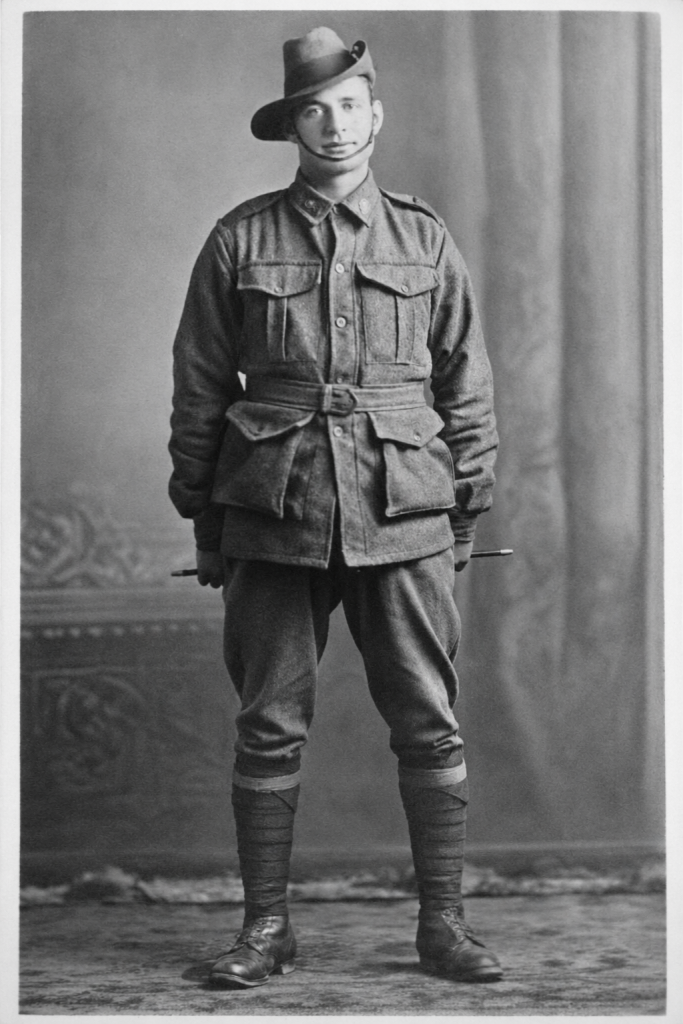
Israel Custerson, known as Jack, was born in Kingston on 22 September 1895. He belonged to the same Custerson family as William Custerson, and the twins David and Robert, but his war took a very different path. While many Kingston men enlisted in Britain and served in British regiments, Israel’s route to the Western Front ran through Australia.
In 1912, aged about sixteen or seventeen, Jack emigrated to Australia. He sailed from London on the Marathon, an Aberdeen Line ship bound for Sydney. The passenger list records him as Israel Custerson, a labourer aged 17, and many of the passengers around him were similarly described as farmers, labourers or domestic servants. This suggests that he was part of the wider movement of young British workers to Australia, where farm labour and domestic service were in demand. The Marathon arrived in Sydney on 1 December 1912, so Jack was in Australia well before the war began.
Australia in 1912 was still a young Commonwealth, and British migration to Australia was often presented as a chance for work, land and a more independent future. For a young man from rural Cambridgeshire, the journey from Kingston to New South Wales must have been immense: not simply a move to another county or city, but to another lifestyle and very different opportunities.
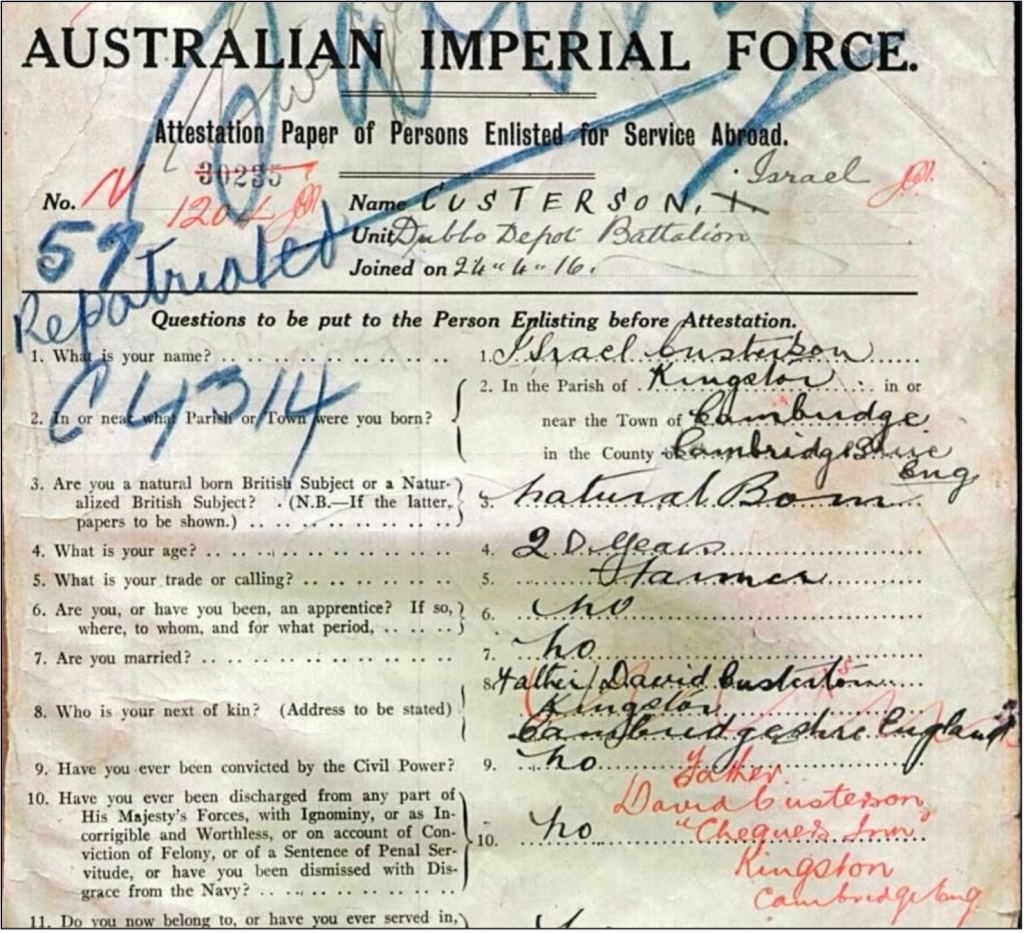
When war came, Jack enlisted in the Australian Imperial Force. His service number was 1204, and the Australian War Memorial records him as a private in the 13th Australian Infantry Battalion. The same record confirms that he served in the First World War and returned to Australia.
His enlistment papers give a physical description of him: 5 feet 8½ inches tall, weighing 160 pounds, with a chest measurement of 36 to 39 inches. He had a fresh complexion, blue eyes and brown hair. These details are administrative, but they bring him briefly into view: no longer just a name, but a young man of twenty or twenty-one, physically fit enough to be accepted for overseas service.
Jack embarked from Sydney on the Ceramic on 7 October 1916 and arrived at Plymouth on 21 November 1916. From there, like many Australian soldiers, he would have moved through training systems in Britain before being sent to France.
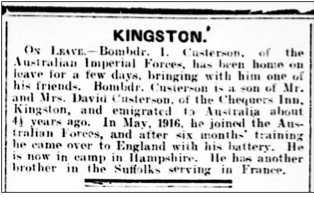
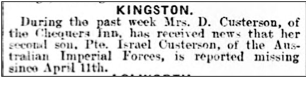
In February 1917 there was a short article about Jack in the Cambridge Independent Press. Throughout the war, soldiers could get up to 10 days leave, in which those with family in England could generally get back across the channel and spend about 5 days at home, before having to return to France.
The 13th Australian Infantry Battalion had already seen hard service. It had been raised in New South Wales and was part of the 4th Australian Brigade. After Gallipoli, the battalion moved to France in 1916, where it fought at Pozières and then through the grim trench warfare of the Western Front.
The Australian War Memorial notes that the 13th Battalion suffered heavy losses at Bullecourt in April 1917, when Australian troops attacked strong German positions without the tank support, they had been promised.
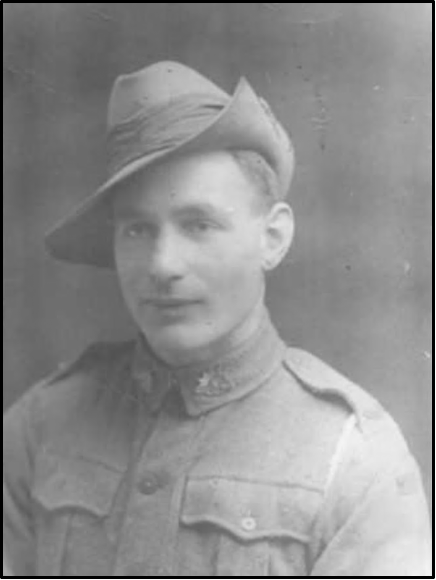
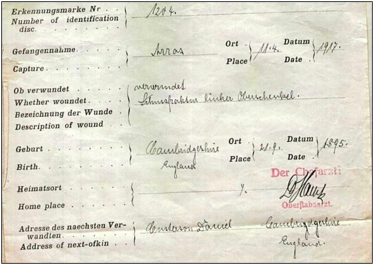
That is the setting for Israel’s wounding and capture. On 11 April 1917, he was wounded in the left femur at Riencourt, near Bullecourt, and taken prisoner by the Germans. He was 21 years old.
Bullecourt is not one of the best-known battle names, like the Somme or Ypres, but for Australians it became a place of deep bitterness. The attack on 11 April 1917 was part of the fighting around the Hindenburg Line, Germany’s newly prepared defensive system in northern France. Australian and British troops attacked near Bullecourt and Riencourt, but the plan depended heavily on tanks that either arrived late, broke down, or failed to give the expected support. The Australian War Memorial describes the 11 April attack as a disaster, and notes that the Australians later broke into part of the Hindenburg Line in the renewed fighting, but at enormous cost and with little strategic gain.
The Australian Department of Veterans’ Affairs gives the stark outline of the first attack.
On 11 April 1917, the 4th Australian Division and the British 62nd Division advanced on Bullecourt, which formed part of the Hindenburg Line. Some Australian troops broke into the German positions, but communications failed, they were exposed on their flanks, and German artillery and counterattacks cut them off. Within hours the attack had failed. Around 3,700 Australians became casualties, and about 1,100 were taken prisoner.
Australian Dept of Veteran Affairs
Jack’s wound to the left femur suggests a serious injury: a wound there could mean major bleeding, fracture, infection, and long-term disability. To be wounded and then captured added another layer of danger. A wounded prisoner was dependent first on enemy medical care and then on the prison camp care system, with all the uncertainty that involved.
Jack was interned at Dülmen, a German prisoner-of-war camp in Westphalia. Dülmen was one of the larger camps through which many Allied prisoners passed. For Australian prisoners, captivity could be especially difficult because they were far from home, and parcels, news and family support often moved more slowly than for British soldiers whose families were much nearer the main channels of communication. A 2025 British Journal for Military History article notes that Australian prisoners of war were a small proportion of total Australian casualties on the Western Front, but at Bullecourt they formed a very large part of the losses: prisoners represented 30 per cent of Australian losses on 11 April 1917.
On 27 December 1917, Jack was transferred to Switzerland. This was significant. During the war, some seriously wounded or ill prisoners of war were moved from German camps to neutral Switzerland under international agreements. They were still not free to return immediately to active service, but they were removed from the harsher conditions of ordinary prison camps and placed in a neutral country for internment, treatment or convalescence. For Jack, the transfer suggests that his wound or general condition was serious enough to qualify him for this arrangement.
Jack survived the war and returned to Australia. His post-war life seems to have been built around farming and family. Electoral records place him at Farm 1245, Corbie Hill, near Leeton, New South Wales. He was described as an orchardist. Also listed there were Vera Josephine Custerson, on home duties, and Robert Custerson, a labourer.
Jack married Vera Josephine Williams at Hawthorn, Victoria. They had a large family: John Clement, Pauline Rose, Desmond Ignatius, Barbara Joan, Brian David and Kevin Richard. Two earlier children, Paul Francis and Peter Damien, had predeceased Jack. That detail, though outside the war itself, matters. It reminds us that life after service was not simply “survival” in the abstract. It was marriage, work, children, bereavement, movement and ordinary endurance.
Jack died on 27 May 1985 at Monbulk, Victoria, aged 89. His death certificate described him as a retired farmer. His son, another J. Custerson, notified the death. Jack was buried at Ferntree Gully Cemetery, where the cemetery registers records Israel Custerson’s burial on 30 May 1985. Vera Custerson was later buried in the same cemetery in 1986.
Israel “Jack” Custerson’s story widens the Kingston picture. He was not a village man who enlisted in Cambridge or Bedford and went to France with a local British regiment. He left Kingston as a teenager before the war, crossed the world to Australia, and then returned to Europe in Australian uniform. He was wounded and captured at Bullecourt, one of the most costly and controversial Australian actions of 1917, survived imprisonment in Germany, was transferred to neutral Switzerland, and eventually went back to Australia to farm, marry and raise a family. His life connects Kingston not only to the Western Front, but to the global movement of young rural workers, the Australian Imperial Force, and the long afterlife of the war in another country.