
Royal Field Artillery
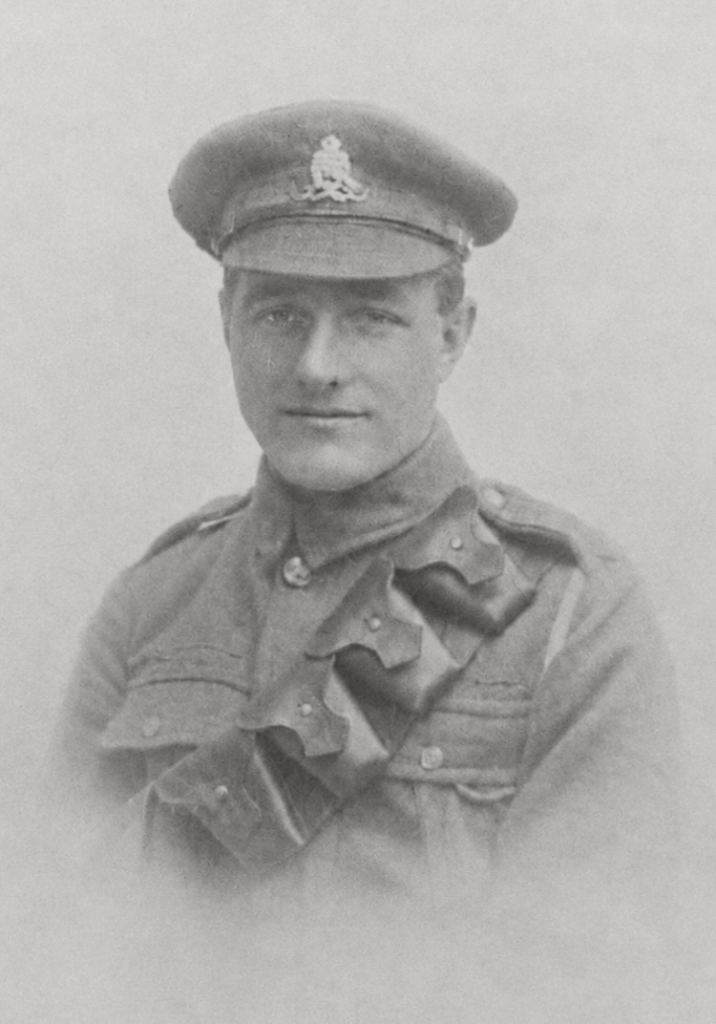
Robert Pain Custerson was born 12 June 1898, the twin brother of David Custerson. Their father, also David, was a hurdle (fence) maker and thatcher. They lived in various properties around Kingston, but around the time of the war seem to have moved into the Chequers public house (now the White House in 2026) where their mother, Emma ran the pub.
Robert Custerson enlisted when he was 20 years old. Given his twin brother David’s experience with the Tribunal, it might be that Robert was successful in getting a 2 year deferment of his service, and he only joined the Army when that exemption ran out. It’s hard to think that one twin was called up as he turned 18 but the other was not on the Army’s list. However, as no service records have been found for either twin, and the Military Exemption Tribunal Records have all been destroyed, we cannot be certain for the reason in their apparent delayed entry to the Army.
The evidence record for Robert is very slim. There are several records related to a Robert Custerson who served in the Hertfordshire Yeomanry, but the Autumn 1919 Absent Voters record clearly lists Robert Custerson as a Gunner in the Royal Field Artillery.
The lack of any direct records on Robert meant taking a circuitous route based on the practice of issuing service numbers in ‘blocks’. Army units were issued with a ‘block’ of numbers for their periods of recruitment, if you know the timing of the ‘block’ or can infer from surviving records, you can narrow down a likely recruitment date. Someone with a nearby service number to Robert’s 256074 would have been recruited at a similar time.

On that basis, there is an Oswald Bailey, from Wicken, who joined the RFA on 7 June 1918, with the service number 256082, so only 8 digits higher than Robert’s. Also, Herbert Walker served with the RFA service number 256057, 17 numbers prior to Robert, and was recruited on 7 June 1918 albeit at a different recruiting centre.
So, it looks very likely that Robert was conscripted in early June 1918, when he was just turning 20. This would explain the lack of any medal records, because he would not have completed training before the end of the war. A newly inducted RFA gunner first had to undergo general military and then specialist artillery training: drill, horse management and/or gun work, signalling, ammunition procedures, gunnery, discipline and the practical work of operating as part of a battery, before he was of military use. Even under the compressed conditions of 1918, that took time.
However, he seems then to have been retained in the Army until the post-conflict occupation of Germany and full demobilisation had been completed, towards the end of 1919. The demobilisation process after the conflict strongly favoured men with longer service, wounds and wives and families. Robert therefore would have been very low on the list for a fast repatriation.
From the 1921 Census, it is clear Robert came back to Kingston after the war and worked as a stockman for JE Green at Library Farm in Kingston. He was still living with his parents in the Chequers.
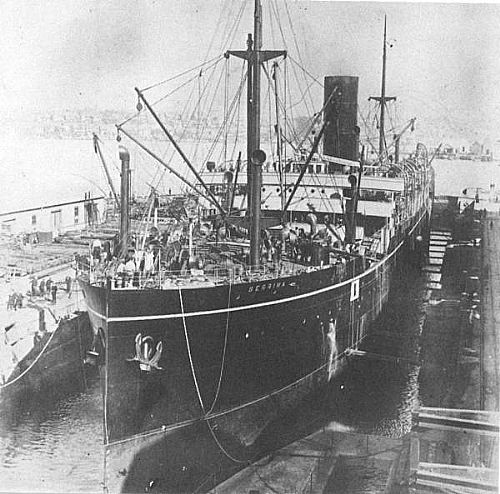
On 22 November 1928, Robert left England on the SS Berima and sailed to Sidney, Australia.
In the Australian census of 1930, he was registered as a Farmer, living at 1245 Corbie Hill, Leeton, Riverina, New South Wales, with his brother, Jack (Israel). Later he moved to Goolagong Road, Canowindra, NSW. Canowindra is a small town on the Belubula River just inland of the south-east coast, about 200 miles north of Sidney. When Robert moved there, it had a population of about 1,500 people. As far as the records show, he lived in Canowindra for the rest of his life.
Have the twins played a joke on us?
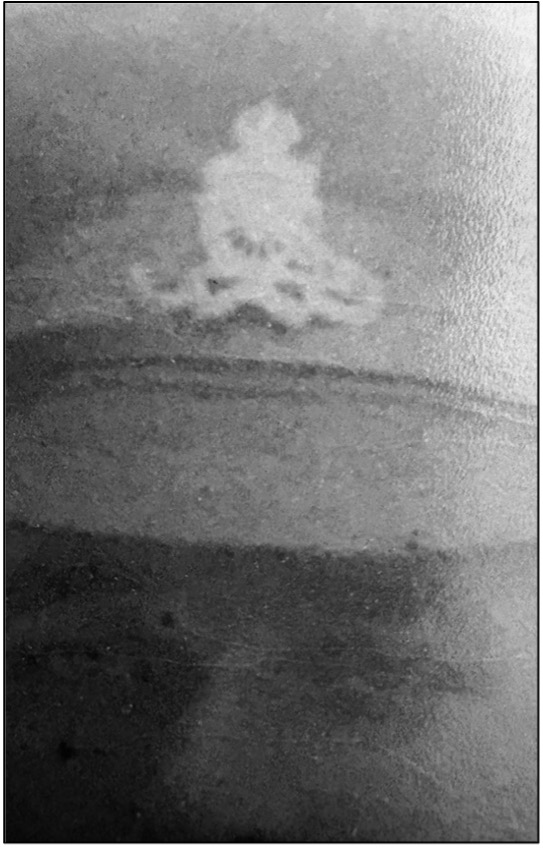
The picture here, named as Robert Custerson, was in the previous version labelled as David, the twin most well known in the village, because after the war he lived out the rest of his life in Kingston.
However, the picture is clearly of Robert, and not David. Take a close view of the cap badge here and compare it to the cap badges in the collection. It is nothing like the Essex Regiment cap badge that David Custerson would have worn, it is the gun and limber of the Royal Field Artillery, the unit in which Robert served.
Further, the man in the full picture is wearing a bandolier, which fits with the RFA. A Driver in the Essex Regiment might wear a bandolier, but it wasn’t standard uniform and so wasn’t the likely wear for a photo.
The picture that for years was labelled David Custerson is a picture of his twin, Robert Custerson. There is some logic in this error, as the villagers knew David Custerson for the rest of his life, whereas Robert left the village in 1928. But equally, David lived with the picture in the church – and never mentioned it wasn’t him. Have the twins been playing the classic ‘switch’ on us since 1919?